OnlyDrams
- 4.8
- Rating
- 10.00K
- Installs
- Free
- Price

 Analysis by App-foxy
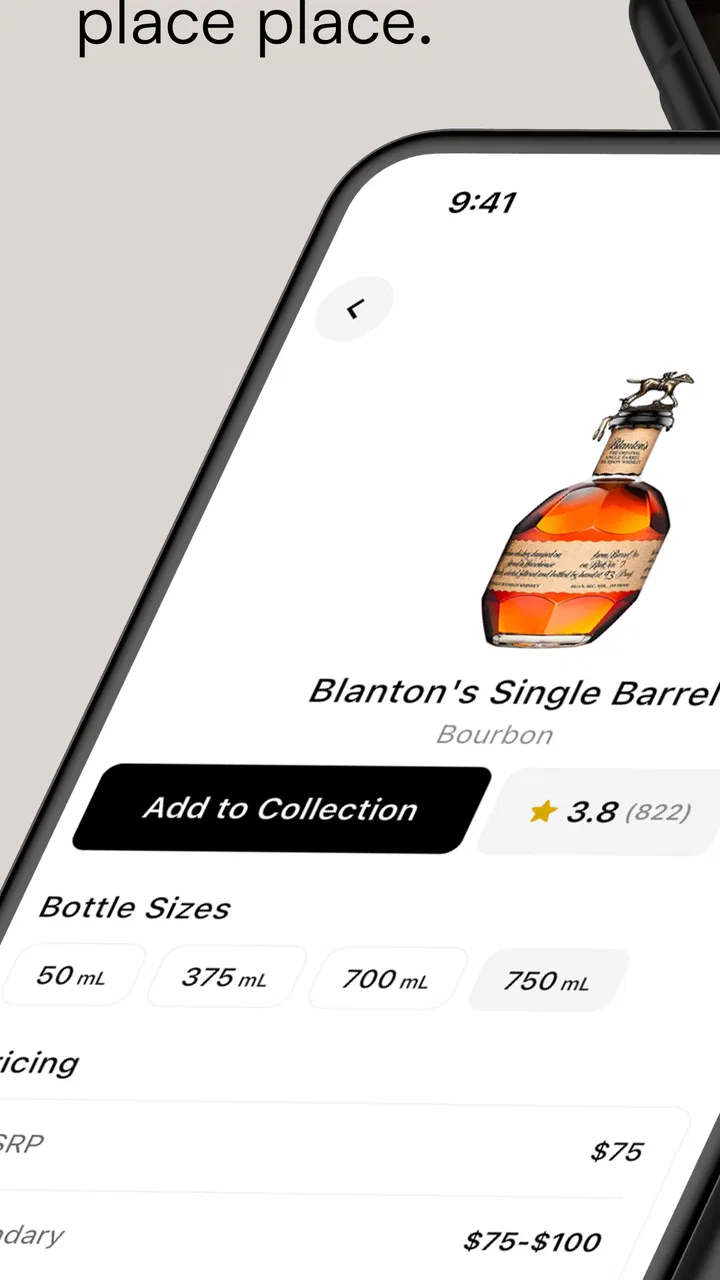
I found OnlyDrams most useful when I treated it as a personal spirits notebook rather than as a shopping app or a social network. It is a Food & Drink app from OnlyDrams, built around keeping track of a collection of bottles, whether that collection is modest or has started taking over a cabinet. My first impression was that its value depends less on how many bottles I own and more on whether I want to remember what I have, organize it consistently, and make better decisions before buying another bottle.
The app is free to start, which makes it easy to try without committing money up front. It is rated for mature users aged seventeen and over, a sensible fit for an app centered on alcoholic spirits. The current version is 3.11.10, and it runs on Android 8.0 or later. Optional purchases range from $0.99 to $99.99 per item, so I would recommend checking which functions are included before assuming every collection-management tool is free.
How comfortably OnlyDrams works for different people and situations
I find the app most comfortable when I use it in short, purposeful sessions rather than treating collection upkeep as a project. That makes it easier to fit around different routines, from checking a bottle while shopping to gradually recording a cabinet at home. The next section looks at how those habits can be adapted to different people and circumstances without expecting everyone to catalogue in the same way.
You May Also Like

 AccuWeather: Weather Radar
AccuWeather Review: A Quick, Clear Forecast for Everyday Decisions
For everyday plans, the best forecast is the one you can understand quickly. AccuWeather makes rain timing, radar, and local conditions easy to act on, with a few trade-offs.

 Hill Climb Racing
Why Hill Climb Racing Still Turns Crashes Into One More Run
A tiny car, a bumpy hill and one more upgrade: Hill Climb Racing keeps resurfacing because its simple chaos makes every near-miss feel personal.

 AliExpress - Shopping App
AliExpress Makes Global Shopping Feel Personal, but Shoppers Bear the Risk
AliExpress turns a global marketplace into a pocket-sized discovery engine. Its reach is useful, its shopping loop compelling, and its trade-offs easy to miss.

 Lords Mobile: Kingdom Wars
Lords Mobile Is a Kingdom-Building Routine, Not a Quick Match
A case-by-case verdict on the building, battles, device demands, and social commitments that make Lords Mobile rewarding for some players and exhausting for others.

 PDF Scanner app - TapScanner
TapScanner Makes Paperwork Easier to Capture, Check, and Share
TapScanner makes scanning with a phone feel less like a rescue operation and more like a dependable step in getting work done. Its capture tools are useful, though not flawless.

 Block Blast!
 Shows How Much a Puzzle Game Can Leave Out
A quiet grid game shows why puzzle players increasingly value instant clarity, repeatable skill and low-pressure play—and where the genre still needs to catch up.
More From Our News Desk
View All News


Readability and navigation that suit a collection rather than a tasting journal
The central idea is straightforward: I can use the app to keep a digital record of bottles instead of relying on memory, photographs scattered through my phone, or a spreadsheet that becomes difficult to maintain. That makes it especially practical for people who buy spirits occasionally but want a reliable overview, as well as for enthusiasts who need more structure as their collection grows.
In everyday use, the most important design choice is whether I can move from the broad collection view to one specific bottle without feeling lost. A collection app should let me answer simple questions quickly: What do I already own? Which bottle did I open recently? What should I avoid buying twice? OnlyDrams is most convincing when used for these short checks. I do not need to reconstruct a tasting note every time; I need a clear record that helps me make a decision.
That distinction matters for readability. A long list of bottles can become tiring if every entry carries equal visual weight. I found it easier to think in layers: first identify the bottle, then open its details only when I need more context. This is a better workflow than trying to enter every possible thought immediately. When adding a new bottle, I would keep the first pass simple and return later for extra notes. That reduces the strain of typing and prevents collection maintenance from feeling like homework.
The app is also more approachable when I establish a naming habit from the beginning. I would use a consistent format for bottle names and avoid adding personal comments to the title field. For example, the title should identify the spirit, while tasting impressions, purchase thoughts, or serving ideas belong in the relevant detail area if available. Even without turning the collection into a formal database, this small discipline makes searching and scanning much easier later.
For users with reading difficulties, visual fatigue, or limited patience for dense screens, the practical test is not whether the app looks attractive at first launch. It is whether the information remains understandable after dozens of entries. I would add a handful of bottles first, check how the list feels, and only then import or record the rest. A short trial gives a better answer than judging the interface from a single empty screen.
I also appreciate that the app’s purpose is narrower than a general note-taking tool. A notes app can store anything, but it leaves the structure entirely to me. OnlyDrams starts from the specific problem of managing spirits, which removes some setup work. The trade-off is that I have less freedom than I would in a blank spreadsheet or notebook. Someone who enjoys designing their own categories may prefer a general database, while someone who wants a ready-made home for bottle records will likely appreciate the focused approach.
Motor and sensory considerations during bottle entry
Collection management sounds simple until I am standing in front of a shelf with a bottle in one hand and a phone in the other. That is where motor demands become relevant. Entering a complete record can involve tapping, scrolling, selecting fields, and typing names accurately. I would not try to catalogue an entire cabinet in one session if repeated gestures are uncomfortable. A better method is to add a few bottles at a time, preferably while seated, with the bottles nearby and enough time to check each entry.
This is one of the app’s less obvious trade-offs: the more detailed I want my records to be, the more physical effort the collection requires. A person with limited dexterity may find a short record manageable but a large backlog exhausting. Voice input offered by the phone’s operating system may reduce typing in some situations, although I would still review the result carefully because spirit names and producer names are easy for speech recognition to misread.
For users sensitive to glare or small visual details, the setting where the app is used makes a difference. A dim drinks cabinet, a bright shop, and a kitchen counter under strong lighting all create different viewing conditions. I would avoid doing careful data entry in a dark room with the screen turned up too brightly. In a shop, I would use the app for a quick check of my existing collection rather than attempt a full record while standing in an aisle.
People with attention-related difficulties may benefit from separating “capture” from “organize.” The first task is simply recording enough information to recognize the bottle later. The second is cleaning up names, adding notes, and deciding how useful the entry will be. Trying to make every record perfect at the moment of purchase creates unnecessary friction. My practical rule would be: record the bottle while the information is in front of me, then refine it during a calmer session.
There is also a sensory consideration that is easy to overlook: spirits collections can carry strong smells, and tasting sessions can become distracting or tiring. I would use OnlyDrams before tasting to prepare a shortlist and after tasting to record impressions, rather than repeatedly checking the phone between every sip. That keeps the app in a supporting role and makes the actual tasting less screen-focused.
For people who rely on larger text, screen magnification, voice control, or other phone-level assistance, the experience will depend partly on the operating system and device. I would test the most important tasks—opening the collection, locating a bottle, and saving an entry—before committing to a large catalogue. Those actions reveal more than a general accessibility claim because they show whether the app fits the way a particular person actually interacts with a phone.
Situational access: from a shop visit to a shared drinks cabinet
The strongest everyday use case for me is avoiding duplicate purchases. Imagine visiting a specialist shop and finding a bottle that looks familiar. Instead of guessing whether it is already at home, I can check the collection before spending money. This is particularly useful when labels differ slightly between releases or when several bottles from the same producer look similar. The app turns a vague memory into a quick reference point.
Another useful situation is planning a tasting at home. I can review what I already have, select a few bottles with a sensible progression, and use the records afterward to remember which ones deserve another pour. The benefit is not that the app tells me what to like. Its benefit is that it preserves my own decisions, which become more valuable after the novelty of a bottle has worn off.
OnlyDrams can also help when a collection is shared informally with family or friends. If several people buy bottles for the same cabinet, a single record can reduce confusion about what is unopened, what has already been tried, and what was purchased for a particular occasion. I would still agree on one person’s naming convention before several people start adding entries. Without that agreement, the digital collection can become just as inconsistent as handwritten labels.
Travel is another realistic context. Before leaving for a trip, I can use the collection as a memory aid when deciding whether a distillery, region, or style is already well represented at home. This does not replace checking local laws, luggage rules, or retailer details, but it helps me make a more deliberate choice. The app is most useful here as a personal inventory, not as a guarantee that a particular bottle will be available or suitable to transport.
For users with limited internet access or older devices, I would test the app in the exact situations that matter to them rather than assuming that a collection tool will behave the same everywhere. A person who only uses it at home may have a very different experience from someone who depends on it in shops, at tastings, or while travelling. The minimum operating system is Android 8.0, so owners of older phones should check compatibility before planning a large collection around it.
The app’s audience is not limited to serious collectors. Someone with a small shelf can use it to remember which bottles are open and which are waiting for a suitable occasion. In fact, a smaller collection may be the best place to begin because it is easier to learn the workflow and decide which details are genuinely worth recording. I would not wait until the cabinet becomes unmanageable; adding bottles gradually is less demanding than reconstructing years of purchases from memory.
Remaining barriers and the points where another tool may be better
The biggest barrier is the effort required to keep information current. A collection app can only be as useful as its records. If I forget to mark a bottle as opened, moved, finished, or given away, the app may create false confidence. This is not a flaw unique to OnlyDrams, but it is an important limitation of digital inventories: convenience at lookup time depends on consistency at entry time.
I would also be cautious about over-recording. Detailed tasting notes can sound appealing, yet most people do not need a paragraph for every bottle. If the app encourages me to capture more information than I will actually revisit, the collection becomes cluttered. My better approach is to save details that change future decisions: whether I would buy the bottle again, who enjoyed it, what food worked with it, or whether it should be opened for a particular occasion.
Cost deserves attention as well. The app itself is free, but in-app purchases are available from $0.99 to $99.99 per item. That wide range means the financial experience may differ depending on which optional tools I want. I would begin with the free experience, identify the exact problem I need solved, and only then consider paying. A premium feature is worthwhile when it saves repeated work; it is less worthwhile when it merely adds information I will never consult.
Someone who wants a public tasting community, live retail prices, professional cellar accounting, or a flexible inventory system for many unrelated products may be better served by a different category of app. A spreadsheet offers more control over columns and formulas. A general notes app is faster for free-form writing. A specialist tasting platform may be stronger for comparing opinions with other drinkers. OnlyDrams makes more sense when the central need is keeping a spirits collection organized without building the structure from scratch.
There is also a social barrier for households where several people use different phones or have different comfort levels with apps. A shared collection only works if everyone agrees to update it. If one person records every purchase and another relies on memory, the digital inventory will quickly become incomplete. In that situation, I would use the app as the owner’s personal reference rather than pretend it is a fully synchronized household system.
Age and context matter too. The mature rating of seventeen and over means this is not an app for children or for a family device intended for mixed-age use. Adults should also avoid turning collection tracking into a prompt to drink more often. I see the app as a way to organize ownership and memories, not as a drinking schedule. That distinction is especially important for people who are trying to moderate their alcohol use or who find collection-focused tools too tempting.
Finally, I would not confuse a well-organized list with a complete record of a bottle’s condition. Storage temperature, light exposure, seal quality, and fill level can affect spirits, but the app cannot replace physically checking the bottle. My most reliable workflow is to use OnlyDrams for identity and personal history, then inspect the actual bottle before serving or gifting it.
An inclusive verdict for spirits collectors
OnlyDrams has a clear purpose and a useful place in my routine: it helps turn a shelf of bottles into something I can understand at a glance. Its rating of 4.8 from around 2.6 thousand ratings and more than 10 thousand installs suggest that many people find the concept worthwhile, although those figures do not remove the need to test the workflow against my own needs. The app was released on June 19, 2024, and the developer is OnlyDrams.
I would recommend it to an adult who wants a dedicated spirits inventory, especially someone who regularly forgets what is already at home or wants to preserve personal tasting decisions. It is also a reasonable starting point for a growing collection because the focused format is less intimidating than designing a spreadsheet from nothing. The best results come from short, consistent updates rather than ambitious cataloguing sessions.
I would be more hesitant to recommend it to someone who needs extensive customization, a collaborative household database, or a purely free experience with no optional purchases. People with motor, visual, or attention-related needs should try the key tasks on their own device and in their usual environment. The app can support accessible habits—small batches, clear naming, voice input, and careful lighting—but those habits do not remove every possible interaction barrier.
My final view is positive but practical. The real strength of OnlyDrams is not collecting more bottles; it is making the bottles already owned easier to remember and use. Start with a small sample, record only information that will help later, and check whether the collection view remains comfortable to read. If that simple routine fits, the app can become a genuinely helpful companion for a spirits cabinet. If it feels like another database demanding constant maintenance, a simpler notes system may be the kinder choice.
FAQs for OnlyDrams
01What is OnlyDrams, and what can users do with it?
OnlyDrams is an entertainment and social platform focused on creator content and community interaction. Depending on the version and region, users may browse creator profiles, view available posts or media, follow accounts, and interact with content. Before downloading, it is worth checking the current app description, supported features, and content policies, since availability and functionality may change over time.
02Is OnlyDrams free to download and use?
The app may be free to download, but some content, creator interactions, subscriptions, or premium features can require payment. Users should review the pricing information shown in the app store and inside the application before subscribing. Pay particular attention to recurring billing, renewal dates, cancellation rules, and whether purchases are managed through Google Play or the Apple App Store.
03Is OnlyDrams appropriate for all ages?
OnlyDrams may contain mature, suggestive, or otherwise age-restricted creator content, so it should not automatically be considered suitable for children or younger teenagers. Check the official age rating, content warnings, and platform guidelines before installing it. Parents and guardians should also review device-level restrictions and understand that user-generated content can vary considerably between profiles.
04What privacy and account information does OnlyDrams require?
Like many social and creator platforms, OnlyDrams may request information such as an email address, username, profile details, or payment data when users create an account or purchase premium features. Review the app’s privacy policy and permission requests before registering. Avoid sharing sensitive personal information publicly, use a strong unique password, and enable any available security options.
05How can users stay safe while using OnlyDrams?
Users should interact carefully with creators and other community members, keep conversations inside the platform when possible, and never send money or personal documents outside official payment channels. Use blocking and reporting tools for suspicious behavior, harassment, impersonation, or prohibited content. Also remember that screenshots, downloads, and shared messages may be difficult to control once content leaves the app.
Pros
- Simple interface makes browsing and discovering content straightforward.
- Useful for finding creator updates and exclusive posts in one place.
- Supports direct interaction between fans and creators.
- Regular content updates can keep the experience engaging.
- Convenient mobile access for checking content on the go.
Cons
- Some content may require a paid subscription or extra purchases.
- Availability and quality of posts depend heavily on individual creators.
- The app may not offer much value without following specific creators.
- Notifications can become frequent if several creators are followed.
- Adult-oriented content may make it unsuitable for younger users.

OnlyDrams
Gallery